
The importance of regular nail care.
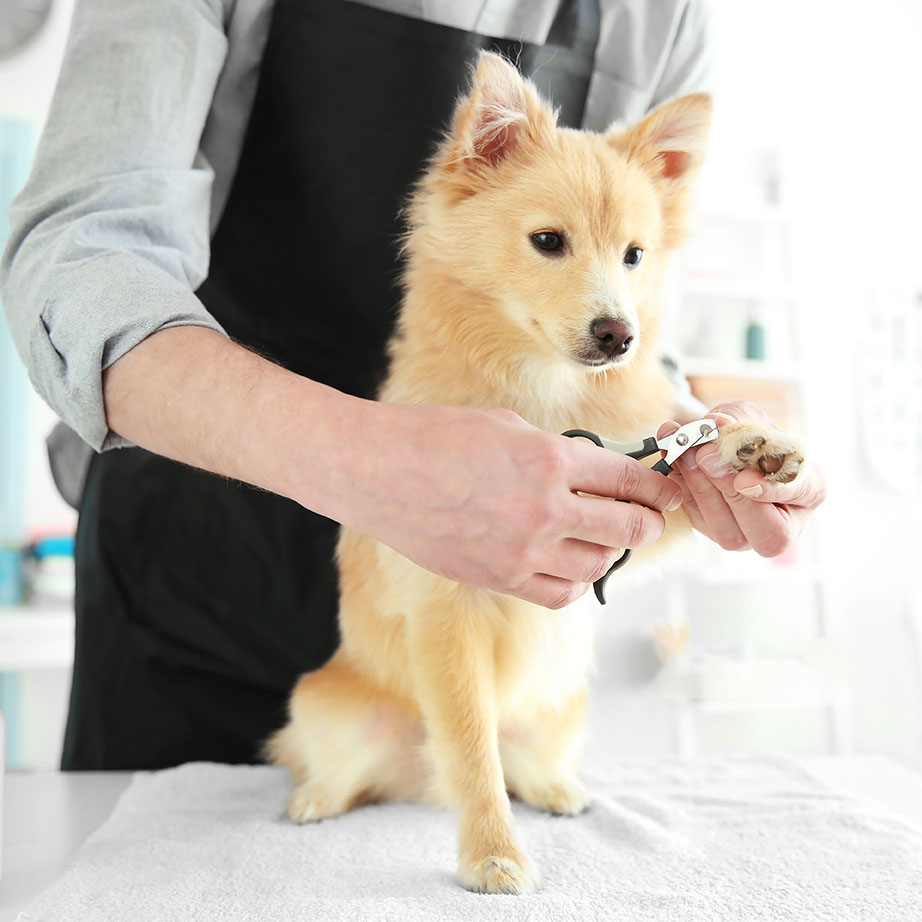
Some owners prefer to take on this task themselves, and may even perform nail care weekly, while others enlist the help of a professional groomer or veterinary staff. Most dogs will need to have their nails cared for at least once per month.

Early Conditioning
Puppy nails tend to grow fast and it is important to get pups used to the idea of nail trimming or filing early. Ensuring youngsters get their nails done at least biweekly while practicing positive foot handling sessions is the key to having an adult dog who tolerates or even enjoys nail care!
Mature dogs can even learn new tricks if you spend time desensitizing and counter conditioning them to nail care. These sessions should happen at your dog’s pace and might look like feeding your dog their favourite treats when the clippers come out, then immediately after you touch the clipper to one of their nails, and so on. Some dogs might prefer being trained to accept a dremel tool or even being trained to use a scratcher board to help make nail care more hands off.
Training in Advance
If your dog only goes to the groomer or vet for procedures, try incorporating going for happy visits just to say hi, do tricks, and eat delicious treats. If nail care tools only come out at home when you
feel you must get things done post-haste, dogs will quickly come to anticipate and dread this, and may start behaving worse to make it stop. With this in mind, having someone available to help calmly lift and hold your dog for nail care can be extremely beneficial.
Many dogs find three legged stands challenging on their own, not to mention when nail care is happening, and without proper support they may seem to be acting up when really they are just unsteady. If you have to work alone with your dog, standing them next to a wall they can lean on, or training them to lie down for procedures might be good options. You can research low stress handling techniques and cooperative care for more information.
PRO TIP:
Dogs who walk, work, or play on abrasive surfaces tend to file their own nails down. Dewclaws, do not make as much contact with the ground so they need to be trimmed more frequently.
Know When to Quit
If a nail care session isn’t going well for whatever reason, don’t be afraid to call it quits, even if you aren’t able to end on a good note. We all have bad days, including our dogs! It will take time and patience to establish good nail care rituals. If your dog’s nails haven’t been kept up regularly, they may need weekly care for a while to get them shortened up again. Dogs who simply cannot cope with routine nail care, especially those who get to the point of being dangerous to themselves or others, may benefit from the use of situational anti-anxiety medication, which is something to discuss with their vet. Separate muzzle training sessions can help keep everyone comfortable and safe, too.
Senior Dogs
As your dog ages, their activity level will likely go down and they may not use their body as much, or as symmetrically. Paying attention to grow out patterns in nails can help pinpoint gait
abnormalities for treatment. Older dogs or dogs with health conditions or impairments may even benefit from toe or paw grips, and nonslip mats around the home as part of their regular nail care. Also be sure to check for irregularities in nail growth as time goes on. Brittle nails, thickening individual nails, or other changes should be brought up to your dog’s vet.
Did you Know…
A dog with long nails will be more susceptible to nail breakage and even orthopedic issues.
Damaged Nails
Occasionally you might find a nail that has cracked or even broken off during activity, or maybe your dog has been quicked (a nail cut too short, into the blood supply, or “quick”). It’s a good idea to have a styptic powder, such as Kwik Stop, on hand should these injuries start bleeding as your dog moves around about their day. The powder is easy to apply and shouldn’t be needed for more than a day or two. Restricting your dog’s activity level for a few days while they heal is also wise. Nails broken at or near their base can be soaked in lukewarm water with a small amount of Epsom salt for a few minutes, several times a day to help soothe and keep the area clean while healing. The nail may need to be trimmed if it is sharp or jutting out, and the area will need to be monitored for infection (heat, swelling and/or discharge) that would need to be addressed by a vet ASAP. Once treated, and as long as the nail matrix the nail grows from wasn’t damaged, most broken nails will grow back normally over time.
Where to Cut
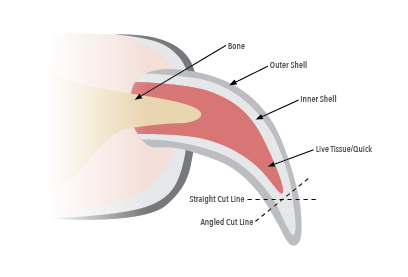
Another thing to consider for nail care is how much to take off and the angle at which you clip or dremel your dog’s nails. If you finish up at an angle instead of straight across, you’ll be able to remove more nail per session. Before you get to that step, you can start to look for a telltale dot in the center of each nail to help indicate when you have gone far enough. This helps make nail care on dark coloured nails as easy as light ones! In the end, the ultimate goal shouldn’t necessarily be getting nails as short as possible, as dogs use their nails for locomotion and need them for grip, but nails that don’t click on the floor when your dog moves are nice for everyone!
Nicole Vaughn, Grooming Manager at Pawsitively Perfect
With over twenty years of professional grooming experience, Nicole is always happy to help people keep their dogs clean and happy.